The Great Unwind: Why Companies Are Ditching Global Supply Chains for Homegrown Resilience
Remember those empty shelves and frustrating delays? Companies certainly do. They're now rethinking decades of global sourcing, bringing production closer to home to build resilience and reduce crippling risks.
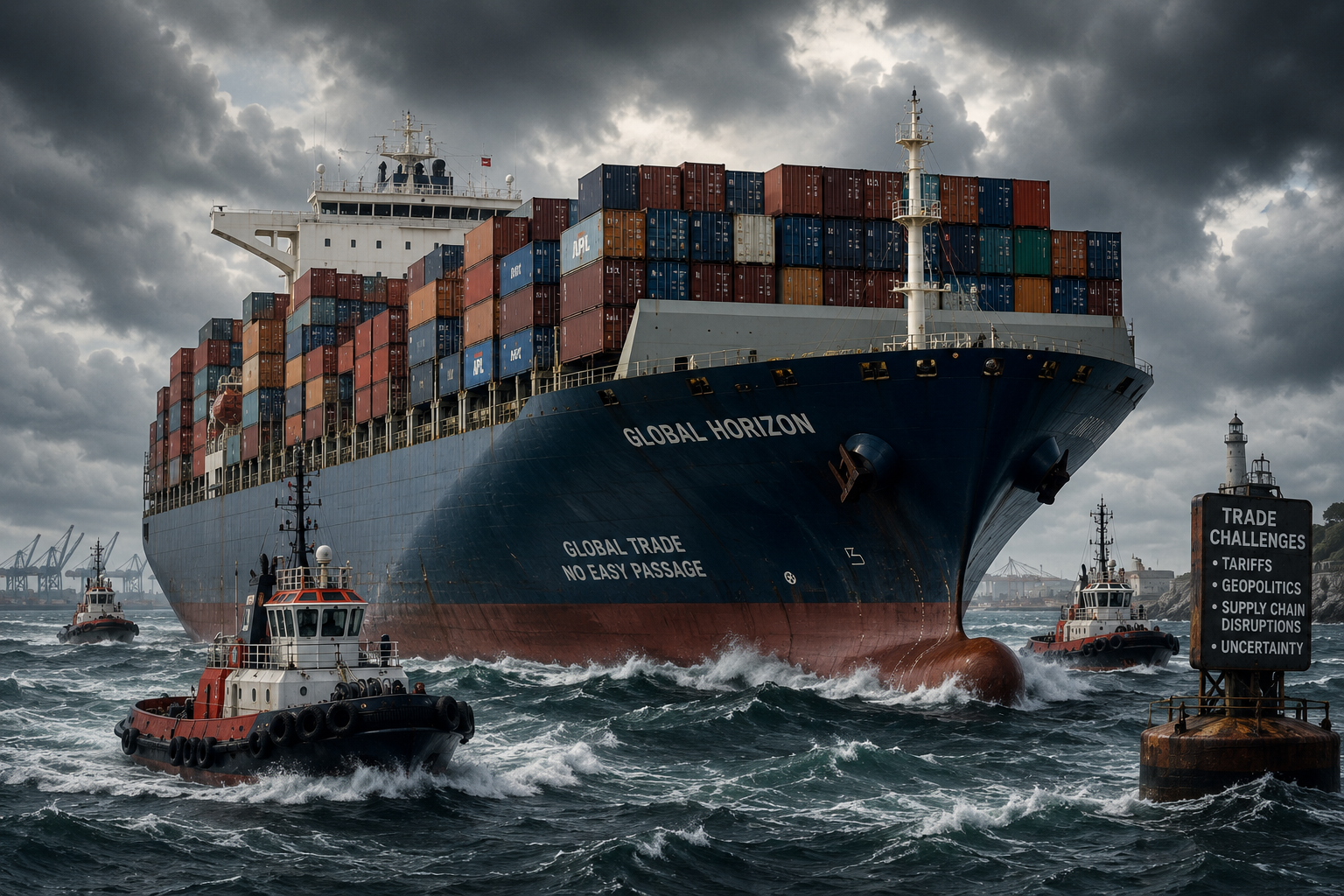
Remember those chaotic days of early 2020? Toilet paper vanished. Hand sanitizer became a rare commodity. Then, it morphed into something more persistent: car dealerships with empty lots, electronics shipments delayed for months, even specific medical components held up indefinitely. It wasn't just a blip. It was a stark, undeniable wake-up call to the fragility of our meticulously optimized global supply chains.
For decades, the mantra was 'just-in-time' and 'lowest cost.' Manufacturers spread their operations across the globe, chasing efficiencies and cheaper labor. It was a brilliant ballet of logistics, until the music stopped. Or, more accurately, until a tiny virus, and then a cascade of other disruptions – from a container ship stuck sideways in the Suez Canal to escalating trade wars and even localized natural disasters – threw the whole system into disarray. The cost of shipping a single 40-foot container from Asia to the US West Coast, once around $2,000, skyrocketed past $20,000 at its peak. That's real money, hitting real bottom lines, and it forced a reckoning.
Now, companies are rethinking everything. They're not just tweaking their spreadsheets; they're tearing them up. The big buzzword? Reshoring. Or nearshoring. Or friend-shoring, depending on who you talk to. It's all about bringing production, or at least critical parts of it, closer to home. Or to trusted allies. The goal is simple: reduce risk, increase resilience, and regain a measure of control that felt utterly lost just a few years ago.
Key Takeaways:
- Companies are actively moving production and sourcing closer to home to mitigate risks after recent global shocks.
- The pandemic, geopolitical tensions, and logistics woes exposed critical vulnerabilities in traditional, cost-driven global supply chains.
- Reshoring offers benefits like faster delivery times, improved quality control, and reduced exposure to international disruptions.
- This strategic shift comes with significant challenges, including higher initial costs, potential labor shortages, and the need for new infrastructure.
- Governments are playing a crucial role, using incentives and investments to attract and support domestic manufacturing.
Consider semiconductors. Taiwan produces over 90% of the world's most advanced chips. When disruptions hit, the ripple effect is immense, impacting everything from smartphones to washing machines, and even modern defense systems. That's why Intel, for instance, is pouring billions into new fabrication plants in Ohio, aiming to bring more chip manufacturing back to American soil. It's a colossal undertaking, sure, but a necessary one, many argue, for economic security and technological independence.
Pharmaceuticals, too, are a huge concern. We saw firsthand how reliant countries were on foreign manufacturers for essential medicines, vaccines, and personal protective equipment. Shifting even a portion of that production domestically or to close neighbors isn't just a business decision; it's increasingly viewed as a matter of national security and public health.
Dr. Anya Sharma, a supply chain strategist with nearly two decades experience consulting for Fortune 500 companies, puts it plainly: 'Companies aren't just looking at the cheapest price anymore; they're looking at the most reliable path. That means understanding the geopolitical climate, the labor pool, and even the weather patterns in a potential manufacturing hub. It's a complete paradigm shift, moving from lean efficiency to robust resilience.'
It's not that simple, though. Reshoring isn't a magic wand. For starters, it's expensive. Building new factories, retooling existing ones, and training a skilled workforce takes serious capital and time. Labor costs in many Western countries are significantly higher than in traditional manufacturing hubs in Asia. And finding enough skilled workers? That's another beast entirely. The future of work looks different, and companies need to adapt to these new realities. They need access to talent with advanced manufacturing skills, which isn't always readily available.
Then there's the question of economies of scale. When you produce millions of units in one massive facility, your unit cost drops. Splitting production across multiple, smaller facilities, while more resilient, often means each unit costs a bit more. Who absorbs that cost? Consumers? Shareholders? It's a tough balancing act, and it’s why careful planning is paramount.
Deciding where to reshore is another strategic puzzle. It's not just about labor costs; it's about access to raw materials, proximity to end markets, political stability, and even energy costs. Some companies are looking at Mexico or Canada for North American production, leveraging existing trade agreements like USMCA. Others are eyeing Southeast Asia for diversified Asian manufacturing. It's a complex matrix of factors, often requiring extensive economic modeling and geopolitical forecasting. You can't just pick a spot on a map and start building.
Governments are stepping in. The US CHIPS Act, for example, is offering billions in subsidies and tax credits to encourage semiconductor manufacturing on home turf. Similar initiatives are popping up in Europe and other regions. They understand the strategic importance of critical industries. They're not just worried about lost jobs; they're worried about national competitiveness and security. This isn't just about business anymore; it's about global positioning and protecting vital interests. It's fundamentally reshaping the business economy as we know it.
It's also not an all-or-nothing proposition. Many businesses aren't pulling up stakes entirely. Instead, they're opting for a 'China Plus One' strategy – maintaining a presence in China but diversifying production to another country, like Vietnam, Mexico, or India. Others are 'regionalizing' their supply chains, serving North America from Mexico, Europe from Eastern Europe, and Asia from within Asia. It's a more distributed, less centralized approach, aiming for a balance between efficiency and resilience. This kind of nuanced approach is a critical element of managing modern industrial risk.
This shift isn't just for the corporate giants either. Smaller and medium-sized enterprises (SMEs) are feeling the pressure and making adjustments. They might not have the capital to build massive new plants, but they're looking for local suppliers, investing in automation, or even exploring advanced manufacturing technologies to make smaller, more localized production runs viable. It's a complex technological evolution that demands continuous adaptation from businesses of all sizes.
Mark Jenkins, CEO of Precision Components, a mid-sized aerospace parts manufacturer in Wichita, Kansas, told me last month, 'We used to source a lot of standard fasteners from overseas. Not anymore. The lead times were erratic, quality control was a headache, and the shipping costs became absurd. We found a domestic supplier just three states away. It's slightly more expensive upfront, but the peace of mind, the speed, and the ability to visit their plant? Priceless. We're even exploring investments in advanced automation to make even more of our specialty parts here, because it makes our operations more predictable.'
The era of hyper-globalized, single-point-of-failure supply chains is fading. What's emerging is a more fractured, more regionalized, and arguably more resilient system. It'll likely mean higher prices for some goods, at least in the short term, as companies absorb increased production costs. But it also promises greater stability, less vulnerability to distant shocks, and potentially new opportunities for domestic manufacturing and skilled labor. This shift will undeniably impact international relations, trade policies, and even the geopolitical balance of power as nations vie for critical manufacturing capabilities. It’s a long game, and we're just in the early innings of this massive realignment.
Frequently Asked Questions:
What's the difference between reshoring, nearshoring, and friend-shoring? Reshoring means bringing production back to the company's home country. Nearshoring involves moving production to a geographically closer country, often a neighboring one. Friend-shoring, a newer concept, means relocating production to countries considered geopolitical allies or trusted partners, regardless of strict proximity.
Will reshoring increase prices for consumers? Potentially, yes. Higher labor costs and reduced economies of scale in domestic production can lead to increased manufacturing expenses. However, these higher costs might be offset by reduced shipping fees, fewer delays, and a more reliable supply, creating a different kind of value proposition for consumers.
Is global trade ending because of reshoring? No, global trade isn't ending, but it is transforming. Instead of highly centralized global supply chains, we're likely to see more regionalized manufacturing hubs and diversified sourcing strategies. Companies will continue to engage in international trade, but with a greater emphasis on risk mitigation and resilience over purely cost-driven efficiency.
What industries are most affected by this trend? Industries with critical components or those highly susceptible to disruptions, such as semiconductors, pharmaceuticals, automotive, and electronics, are at the forefront of this shift. Consumer goods, especially those with complex bills of materials, are also undergoing significant reevaluation of their supply chain structures.