The End of the Office? Digital Nomads Reshape Flexible Work's Future
Picture yourself coding from a cafe in Lisbon, or strategizing marketing campaigns from a beach in Bali. Digital nomadism isn't just a fantasy; it's a rapidly growing reality reshaping how we think about work.
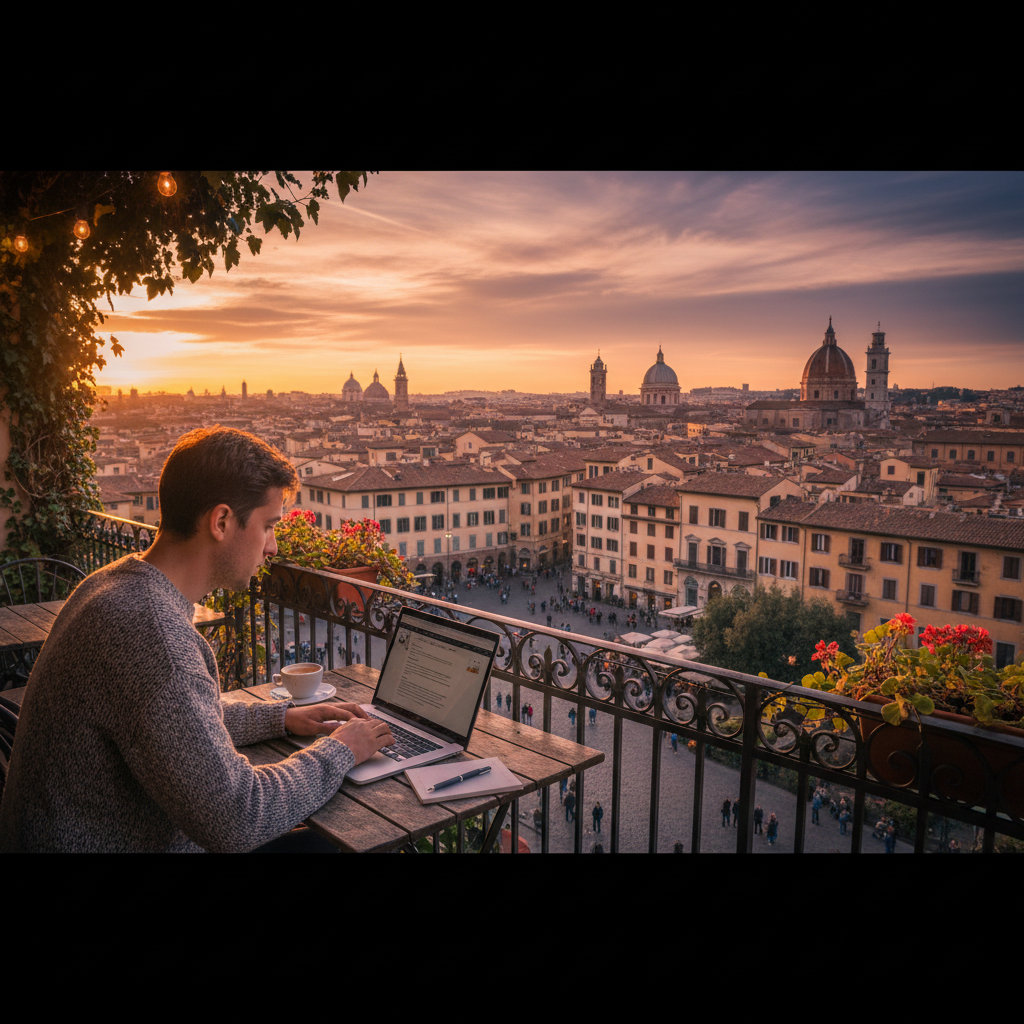
A laptop hums quietly in a co-working space overlooking the Tagus River in Lisbon. Outside, the city is a vibrant tapestry of azulejo tiles and Fado music. Inside, Sarah Chen, a 34-year-old freelance graphic designer, sips her espresso, finalizing a branding package for a startup based in Austin, Texas. She hasn’t seen an office cubicle in three years. Her 'commute' this morning was a brisk walk through Alfama’s winding streets. This isn’t a vacation; it’s her everyday. And she’s far from alone.
Digital nomadism, once a niche lifestyle for a daring few, has exploded into a significant force, fundamentally altering the landscape of flexible careers. It’s no longer just about backpacking twenty-somethings. We're talking about seasoned professionals, families even, choosing to untether from traditional geographic constraints, blending work with travel, and chasing a different rhythm of life. The pandemic, of course, turbocharged this movement, proving to countless companies and employees that productivity wasn’t chained to a physical desk.
But it’s not just about exotic locales. It’s about agency. It’s about building a career that fits life, not the other way around. People want control over their schedules, their environments, and frankly, their destinies. And modern technology has finally caught up to that yearning, making it a viable, often desirable, option for millions.
Key Takeaways:
- Digital nomadism is evolving beyond a niche trend, attracting diverse professionals and families seeking flexibility.
- The rise of remote work, accelerated by the pandemic, has validated location-independent careers for both individuals and companies.
- This lifestyle offers significant benefits like cultural immersion and lower living costs but presents challenges such as isolation and visa complexities.
- Companies are increasingly adapting policies and infrastructure to support a globally distributed workforce.
- Long-term impacts include shifts in urban planning, global economies, and the very definition of a 'career path.'
For years, the nine-to-five grind, office politics, and the soul-crushing commute defined professional life for many. The golden handcuffs were real. But a quiet revolution has been brewing, enabled by robust internet infrastructure and the proliferation of cloud-based tools. Now, if your job primarily involves a laptop and an internet connection – be it software development, content creation, digital marketing, or consulting – the world truly can be your office. We’re seeing a surge in countries, from Portugal to Thailand, Estonia to Barbados, actively courting these remote workers with special visas, understanding the economic injection they represent.
“We’re witnessing a profound recalibration of work-life priorities,” says Dr. Anya Sharma, a sociologist specializing in labor trends at the Global Work Institute. “It’s not simply about working remotely; it’s about a deliberate choice to de-emphasize geographical tethering, often to optimize for quality of life, cost of living, or even just personal growth through immersion in new cultures.” She notes that while the initial wave might have been driven by idealism, the current acceleration is powered by practical economics and evolving corporate trust in distributed teams. This cultural shift isn't just affecting individuals; it's forcing companies to reconsider their entire operational models, from HR policies to digital infrastructure development.
Yet, it’s not all Instagram-perfect sunsets and productive beach days. The reality of digital nomadism is often more complex, requiring immense self-discipline, meticulous planning, and a strong dose of resilience. Imagine coordinating meetings across three different time zones. Or trying to find reliable Wi-Fi in a charming but remote village. Then there’s the isolation. While co-working spaces and online communities help, the transient nature of the lifestyle can make deep, lasting connections difficult.
“One of the biggest hurdles isn’t the work itself, it’s the constant logistical dance,” explains Michael Dubois, a product manager who spent two years working from various European capitals. “You’re always thinking about the next visa, the next Airbnb, the next flight. It can be exhausting. Plus, you really miss your friends and family back home sometimes. It's a trade-off, definitely.”

The burgeoning ecosystem around digital nomadism speaks volumes about its momentum. Platforms connecting nomads with housing, health insurance tailored for global travelers, specialized tax consultants, and even entire communities designed for remote workers are popping up. It’s clear this isn’t a fleeting fad; it’s a structural shift. And employers are paying attention. A recent survey by Remote.co indicated that over 70% of companies plan to maintain or increase their remote work options post-pandemic, creating a fertile ground for even more flexible career paths.
What does this mean for the traditional office? For cities? We’re already seeing commercial real estate markets adapting, with demand for smaller, more flexible office spaces or co-working hubs rising, while long-term leases for sprawling corporate campuses might become a thing of the past. Cities that once relied on commuter income are having to reinvent their appeal, focusing on quality of life, cultural amenities, and community engagement to attract residents, not just workers tied to local businesses. This broader trend has significant implications for business and the global economy as a whole, challenging established norms and creating new markets.
For individuals considering this path, developing certain skills becomes paramount. Self-management, adaptability, and excellent communication skills are non-negotiable. You’ve got to be a self-starter, capable of setting your own schedule and sticking to it. And embracing continuous learning – whether it’s a new language or a new software skill – is essential to stay competitive in a globalized workforce. This emphasis on portable and adaptable skills is also reshaping education and skill development programs worldwide.
The future of work isn't monolithic. It's a mosaic, and digital nomadism is a brightly colored, increasingly prominent piece of that picture. It forces us to ask fundamental questions: What is 'work'? Where does it happen? Who benefits? The answers are still being written, often from a beachfront cafe, a mountain cabin, or a bustling city square thousands of miles from headquarters. It’s an exciting, sometimes challenging, testament to human ingenuity and our enduring desire for freedom.
Frequently Asked Questions:
- What types of jobs are best suited for digital nomadism? Roles that are primarily computer-based and don't require in-person interaction, such as software development, graphic design, content writing, digital marketing, online consulting, and virtual assistance, are ideal. Many tech and creative roles fit this mold naturally.
- Is digital nomadism sustainable long-term? For many, yes, but it requires careful planning, robust financial management, and a strong support network to combat potential loneliness or burnout. It's a lifestyle choice that evolves as individuals do, often leading to slower travel or settling in a few key locations over time.
- What are the main challenges for digital nomads? Key challenges include managing different time zones, securing appropriate visas and residency, maintaining social connections, finding reliable internet, and dealing with potential tax complexities across various jurisdictions. It's a lifestyle that demands significant adaptability.
- How do companies support digital nomads? Companies are developing clearer remote work policies, investing in collaboration tools, offering benefits like global health insurance, and sometimes even providing stipends for co-working spaces. Some are establishing 'hubs' in popular nomad destinations to foster community.