The Canvas of Code: Generative AI and the Future of Creativity
Is generative AI a threat or a thrilling new paintbrush for human creativity? We're diving deep into how these powerful tools are reshaping art, music, writing, and design, and what it means for creators everywhere.
A few years back, the idea of a machine composing a symphony or painting a portrait that genuinely moved you felt like science fiction, a distant echo from a particularly ambitious episode of The Jetsons. Now, it’s not just happening, it’s happening daily. We’re seeing algorithms churn out everything from compelling ad copy to intricate architectural designs, from soulful jazz pieces to photorealistic images that are utterly indistinguishable from human-made photography. It’s a remarkable, sometimes unsettling, moment in the story of human endeavor.
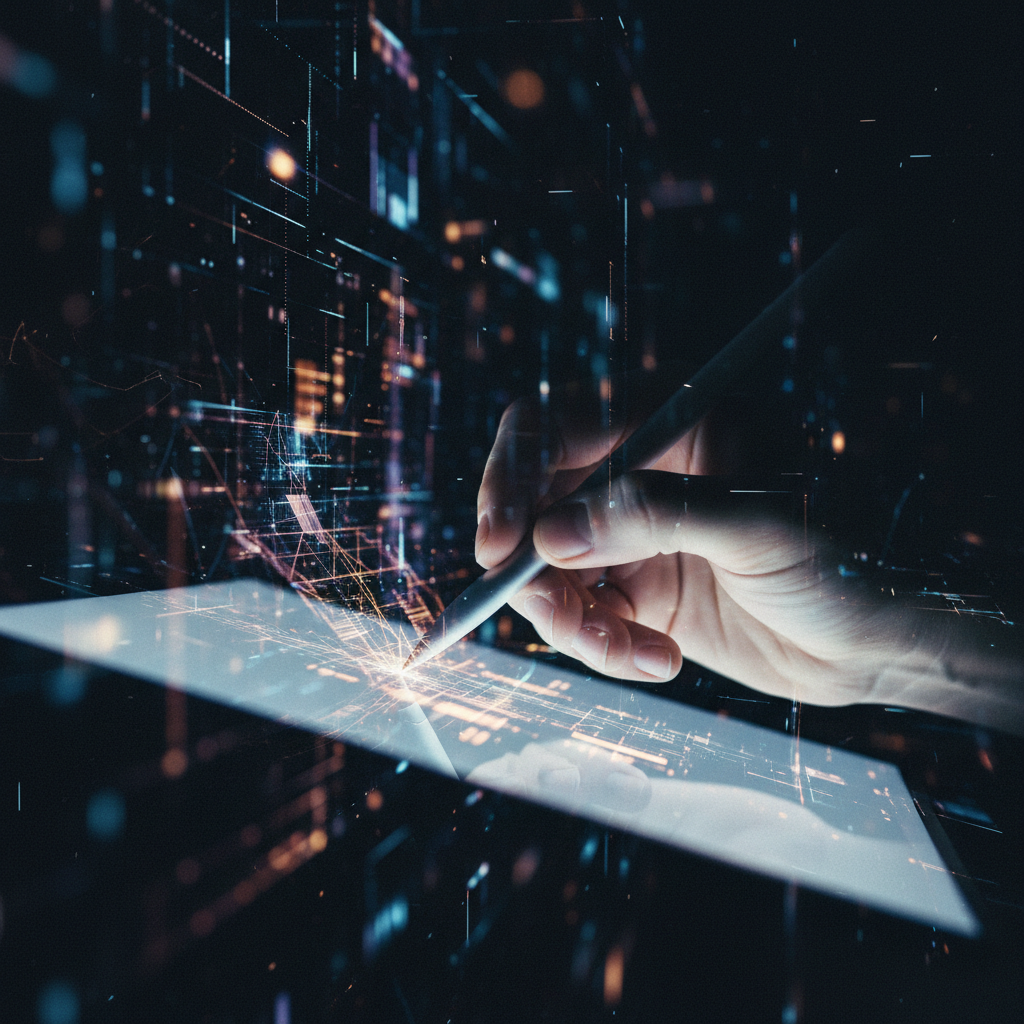
Generative AI, in its simplest form, doesn't just process information; it creates it. Given a prompt, or even a set of constraints, these systems can conjure entirely new content – text, images, audio, video – drawing on vast datasets to learn patterns and styles. They aren't just copying; they're synthesizing, remixing, and, yes, generating. And for anyone who makes a living, or finds joy, in the act of creation, this raises some pretty profound questions. Is the muse now a silicon chip? Will artists become obsolete, or simply find new tools to express an ever-human spark?
Key Takeaways:
- Generative AI is shifting the role of the human creator from sole artisan to conductor, curator, and prompt engineer.
- It's democratizing access to powerful creative tools, allowing more people to explore artistic expression without years of traditional training.
- Ethical concerns around copyright, authenticity, and potential job displacement are significant and demand immediate attention.
- While AI excels at technical execution and generating variations, human vision, emotional depth, and intentionality remain irreplaceable.
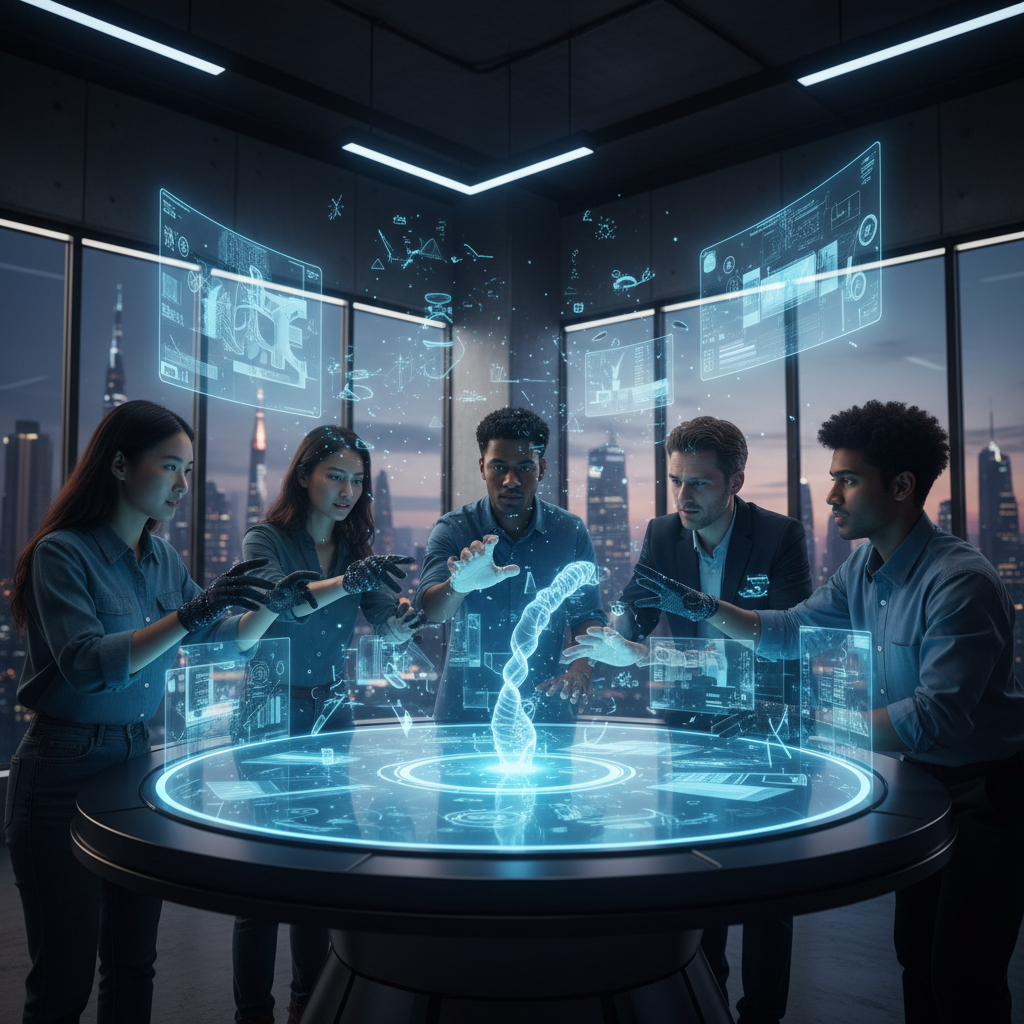
- The future isn't about humans versus machines, but about a dynamic, collaborative partnership that pushes creative boundaries.
We’ve always found ways to extend our capabilities, haven't we? From the printing press to the synthesizer, tools have routinely transformed how we create. This feels different, though. This tool doesn't just amplify our hands; it simulates a form of thought. Dr. Anya Sharma, a computational artist and professor at the Rhode Island School of Design, puts it plainly: “It’s not just about automating repetitive tasks anymore. We're talking about systems that can interpret stylistic cues and produce novel works that fit within a given aesthetic. That fundamentally changes the conversation around authorship.”
Consider the visual arts. Digital artists are using generative AI to create endless variations of concepts, explore new textures, or even develop entire virtual worlds with unprecedented speed. Imagine a landscape artist who can conjure a hundred unique mountain ranges in minutes, then select the most evocative one to refine by hand. Or a graphic designer who needs a fresh icon set and can instruct an AI to provide a dozen distinct styles. It’s a massive accelerator for brainstorming and iteration. But it's not that simple, though. The machine might generate the mountain, but it's the human who feels its grandeur, who positions it for emotional impact, who tells the story.
The music industry is seeing similar shifts. Composers are using AI to generate melodies, harmonies, or even entire backing tracks in specific genres. They can experiment with intricate orchestral arrangements or electronic soundscapes without spending countless hours manually programming every note. It helps break through creative blocks, offering unexpected directions. “We’re not replacing the songwriter,” says Marcus Thorne, CEO of Luminart Studios, a firm specializing in AI-assisted music production. “We’re giving them a super-powered assistant. Someone might ask the AI for a ‘melancholy piano riff with a hint of jazz,’ and get a dozen options to build upon. It’s about expanding possibility, not limiting it.” This collaboration is already redefining what's possible in sound design and composition. You can explore more about how AI is reshaping industries here.
And what about writing? From crafting marketing copy to outlining screenplays or even drafting entire novels, generative text models are becoming surprisingly adept. Journalists are using them for initial research, summarizing long documents, or even generating rough first drafts of routine reports. It frees up human writers to focus on analysis, narrative, and the distinct voice that only a human can truly imbue. It’s an evolution in our creative toolkit, much like word processors changed how we penned our thoughts decades ago. It's about augmenting, not supplanting, the essential human act of storytelling.
Yet, this powerful capability comes with its own set of thorny problems. Authorship is a big one. If an AI generates a piece of art, who owns the copyright? The person who wrote the prompt? The developers of the AI? No one? Courts around the world are grappling with these questions right now, and there aren’t easy answers. Authenticity is another issue. With AI-generated deepfakes and increasingly convincing synthetic media, how do we distinguish truth from fabrication? The ethical tightrope we're walking is getting narrower, demanding careful consideration and robust policies.
And then there’s the existential dread for some. Will these tools take jobs? It’s a valid concern, and history tells us that technological shifts do change employment landscapes. Certain rote creative tasks, like generating basic product descriptions or stock imagery, are ripe for automation. But new roles are emerging too: prompt engineers, AI ethicists, curators of AI-generated content, and even hybrid creative roles that blend technical savvy with artistic vision. The key, experts argue, is adapting and focusing on uniquely human skills: critical thinking, emotional intelligence, complex problem-solving, and, of course, that innate drive to create. Understanding the future of work requires a close look at these emerging trends.
“The human element isn’t going away,” asserts Dr. Sharma. “If anything, it becomes more precious. The AI can give you a thousand variations of a smile, but it’s the human artist who understands the nuance of sorrow behind a forced grin. It’s the human who brings intention, the lived experience, the soul to the work. That’s where our value truly lies.” Generative AI provides the brushstrokes, perhaps even the canvas, but the human remains the visionary.
Ultimately, the future of creativity isn't about machines taking over; it's about a fascinating, dynamic partnership. We’re standing at the precipice of a new era where the act of creation is likely to become more collaborative, more iterative, and perhaps, more accessible than ever before. It will demand new skills, new ways of thinking, and a renewed appreciation for what makes human creativity so uniquely powerful. It’s not a question of if these tools will be adopted, but how we choose to integrate them responsibly and thoughtfully to enrich our shared creative tapestry. The conversation has truly just begun, and what a fascinating one it promises to be.
Frequently Asked Questions:
- Will generative AI replace human artists and writers? It's unlikely to fully replace them. Instead, it's shifting roles, automating mundane tasks, and serving as a powerful assistant, allowing humans to focus on higher-level creative direction and emotional depth.
- How does generative AI learn to create? These systems are trained on massive datasets of existing creative works – images, texts, music – learning patterns, styles, and structures. They then use these learned rules to generate new content that aligns with user prompts.
- What are the main ethical concerns with generative AI in creativity? Key concerns include copyright infringement (as AI models are trained on existing works), authenticity (distinguishing AI-generated content from human-made), and potential biases embedded in the training data leading to unfair or stereotypical outputs.
- Can anyone use generative AI for creative projects? Absolutely. Many powerful generative AI tools are becoming increasingly user-friendly, offering interfaces that allow anyone, regardless of technical skill, to experiment with generating art, music, or text.